
GHK-Cu
With the gel, median ulcer closure was 98.5%, versus 60.8% with the gel without the peptide. Closure was about three times faster.
GLOW plus KPV: popular for skin, recovery and gut inflammation.
In stock · ready to ship
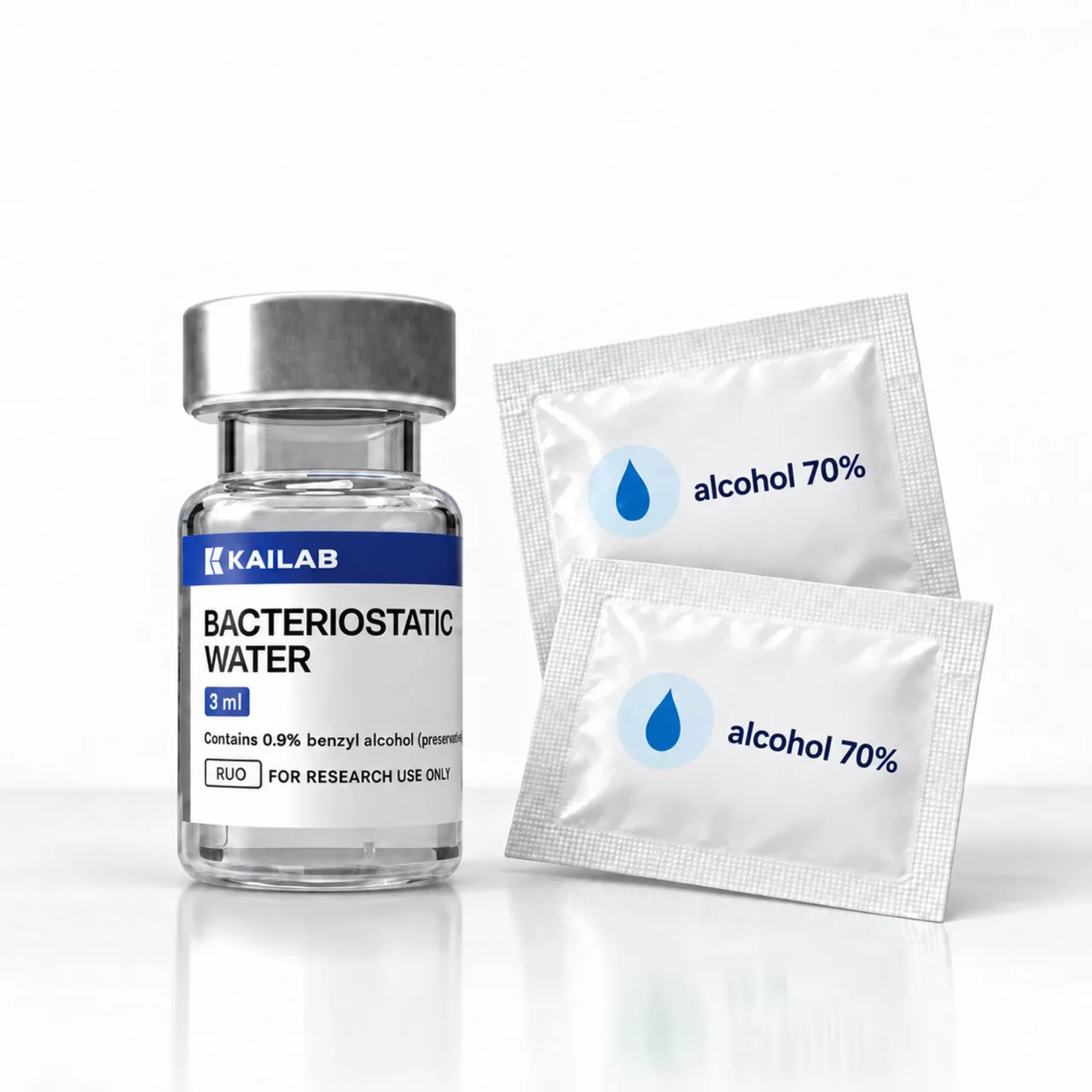 Included free: One 3 mL vial of bacteriostatic water per peptide vial, plus alcohol wipes, in discreet packaging.




 USDT
For research use only. Not for human or veterinary use.
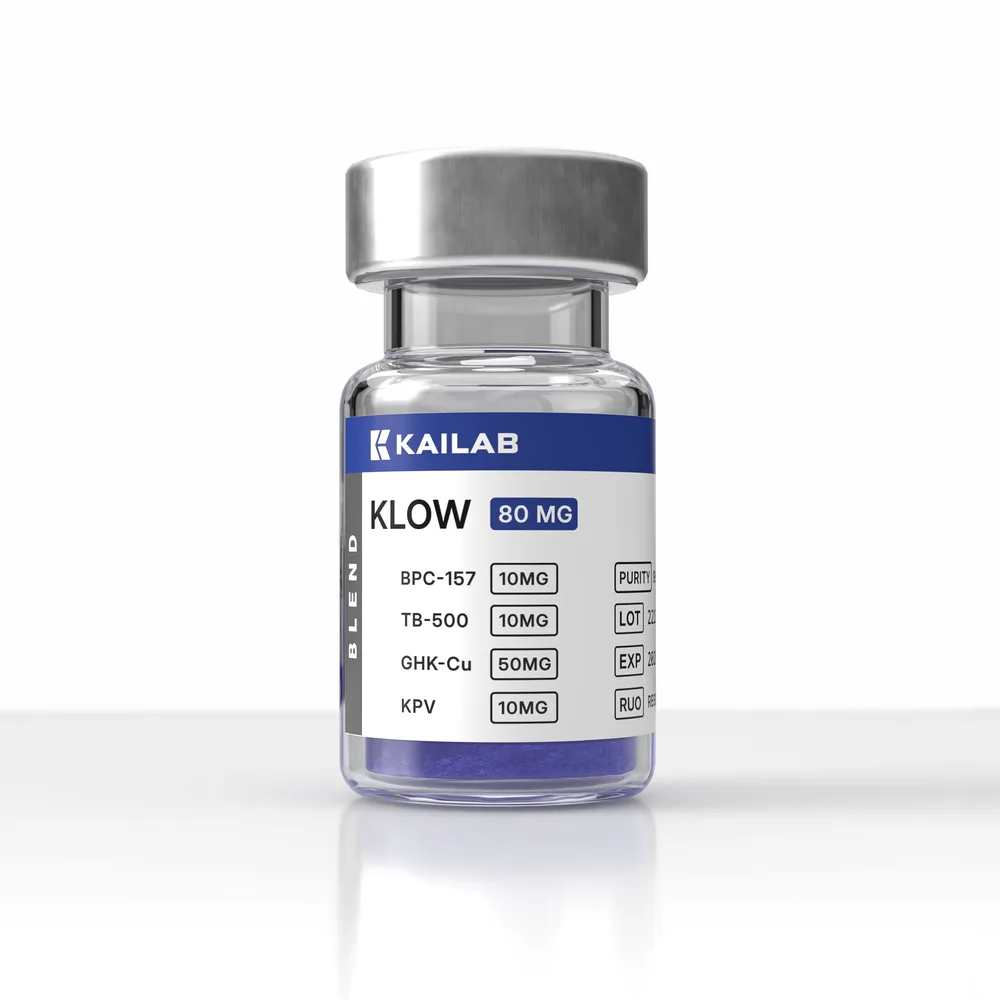
KLOW is a blend of four peptides in one 80 mg vial: GHK-Cu (50 mg), BPC-157 (10 mg), TB-500 (10 mg) and KPV (10 mg). It's GLOW with KPV added.
People look for it for skin and recovery, like GLOW, and also for inflammation, especially in the gut, because of the KPV. There are no studies of the four peptides together.
KPV is a three-amino-acid fragment of the hormone alpha-MSH, known for its calming effect on inflammation. The other three work the same way as in GLOW.
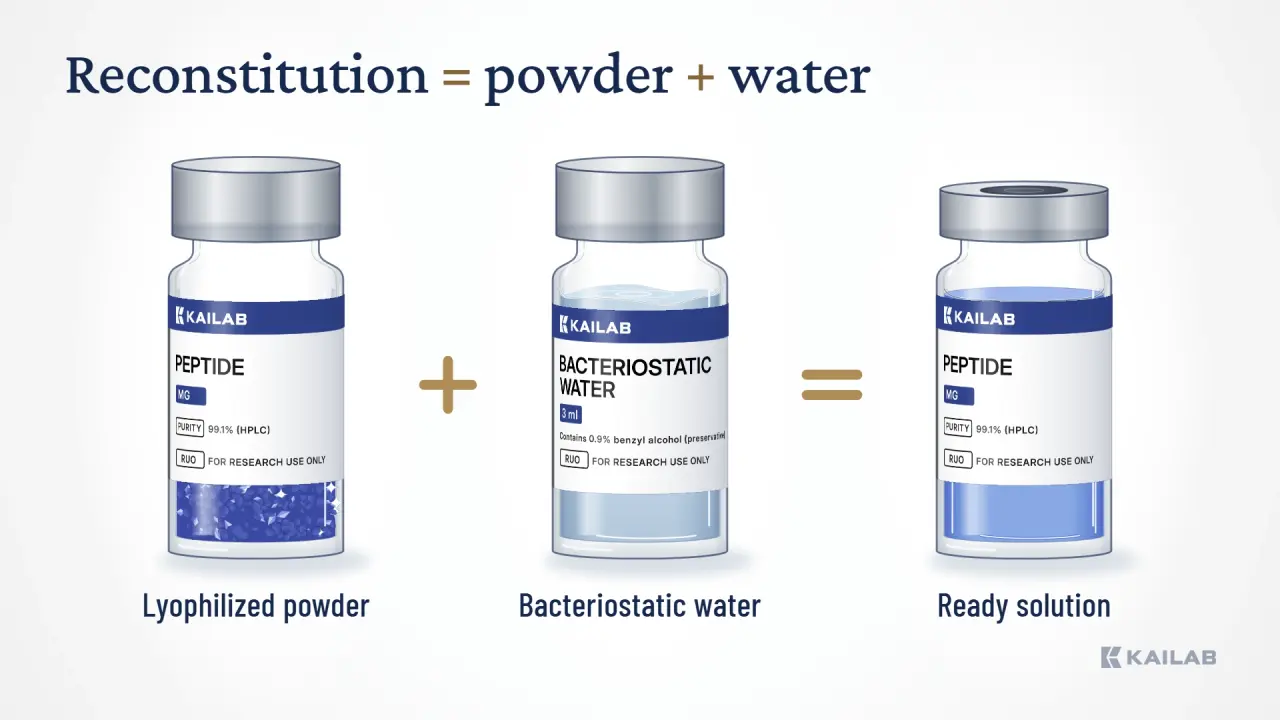
Three steps: mix the powder with 3 mL of water, measure each dose in syringe units and keep it in the fridge.
of bacteriostatic water for the 80 mg vial
Swipe to see all six. Tap an image to see it full size.
Have everything on the “What you need” list at hand.
Wash your hands well and work on a clean surface. Let the vial and the water reach room temperature.
Remove the plastic caps. Wipe the stoppers with alcohol and let them dry.
Draw 3 mL of bacteriostatic water. Read the measurement at the plunger edge closest to the needle.
The vial is vacuum sealed and pulls the water in: hold the plunger right where it enters the syringe. Let the water run down the inside wall of the vial, never straight onto the powder. Dispose of the needle in a rigid container.
Don't shake the vial. Swirl it gently or let it rest; it usually takes 30 seconds to 3 minutes. It's ready when there are no particles and it's clear and blue.
Afterward: label the vial with the date you reconstituted it and keep it in the fridge.
For mixing: One 3 mL (3 cc) syringe. If you only have a 1 mL syringe, fill it three times.
To measure each dose: 0.5 mL (50-unit) U-100 insulin syringes. The 1 mL (100-unit) size also works.
Ask for: “One 3 cc syringe and 50-unit insulin syringes.”
Go up gradually until week 8 and then come down to a maintenance dose. It's the reference published by peptidedosages.com; there are no studies of this blend.
Pick a phase to see it on the syringe
Reconstitute with 3 mL of bacteriostatic water · 26.67 mg/mL (1 unit = 267 mcg)
Calculate another amount →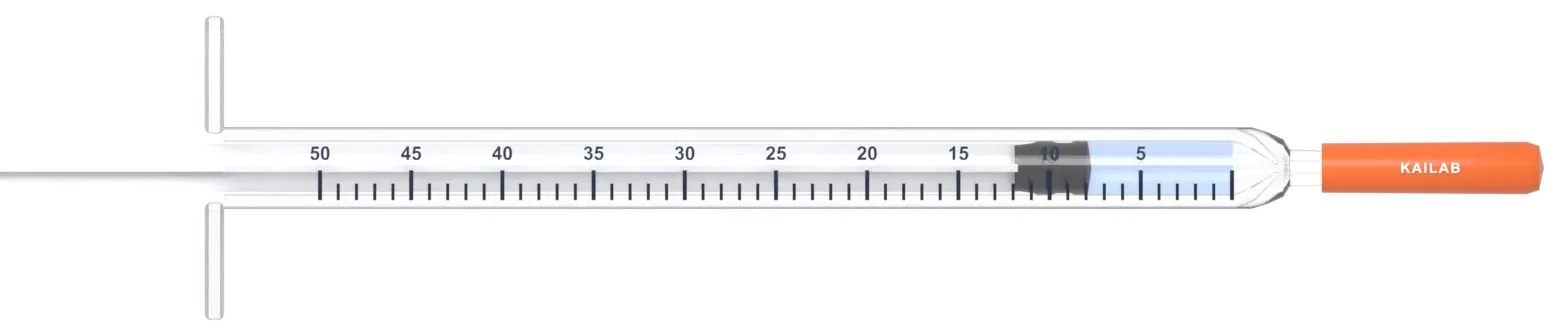
Use it as a guide. You can stay on any week or stop whenever you decide.
Always in the fridge. Take it out only to draw your dose and put it back right away.
Once reconstituted, freezing damages it. Also avoid the fridge door, where the temperature changes the most.
Use it within that time after reconstituting. Protect it from light: keep it in its box or a dark container.
The analysis of the lot we're selling today, done by Janoshik, an independent lab.
Current lotLot KL08260580C · Report 240963
Endotoxin report →Verify endotoxins at Janoshik ↗
There are no studies of the blend. Each component has its own research; these are two starting points.
With the gel, median ulcer closure was 98.5%, versus 60.8% with the gel without the peptide. Closure was about three times faster.
It sums up the research, including clinical trials, in which thymosin beta-4 helped skin wounds heal.
Last reviewed: Oct 31, 2026 · KAILAB team
People look for it for the same things as GLOW, skin and recovery, and also for inflammation, especially in the gut. What's said about it comes from users and from studies of each peptide separately. These are popular uses, not proven effects.
A three-amino-acid peptide (lysine, proline and valine) that comes from the hormone alpha-MSH. It's studied for inflammation, especially in the gut.
If your main interest is skin and recovery, GLOW. If you're also researching inflammation, especially in the gut, KLOW.
Because of the copper in the GHK-Cu. A blue solution is normal.
At KAILAB, the 80 mg vial costs $780,000 COP. It comes with a free 3 mL vial of bacteriostatic water and free shipping to any city in Colombia.
In Quality, on this same page, you can open the report for the strength and lot we sell.
Every peptide vial comes with one 3 mL vial of bacteriostatic water, plus alcohol wipes; the reconstitution guide is on this page. Shipping is free anywhere in Colombia, in discreet packaging.
If your payment is confirmed before 4 p.m. (Monday to Friday) or noon (Saturday), we ship it that same day. After that time, and on Sundays and Colombian holidays, we ship it the next business day. Bogotá time.
Cards, PSE, Nequi, Daviplata and Bancolombia through Wompi, or USDT on the TRC-20 network. You'll see every option at checkout.
Can't find your answer? Visit Help.