
Review of the evidence
The authors reviewed 544 publications on BPC-157 in tendons, ligaments and muscles and included 36. Only one of them was in people.
The authors conclude that controlled clinical trials in people are still missing.
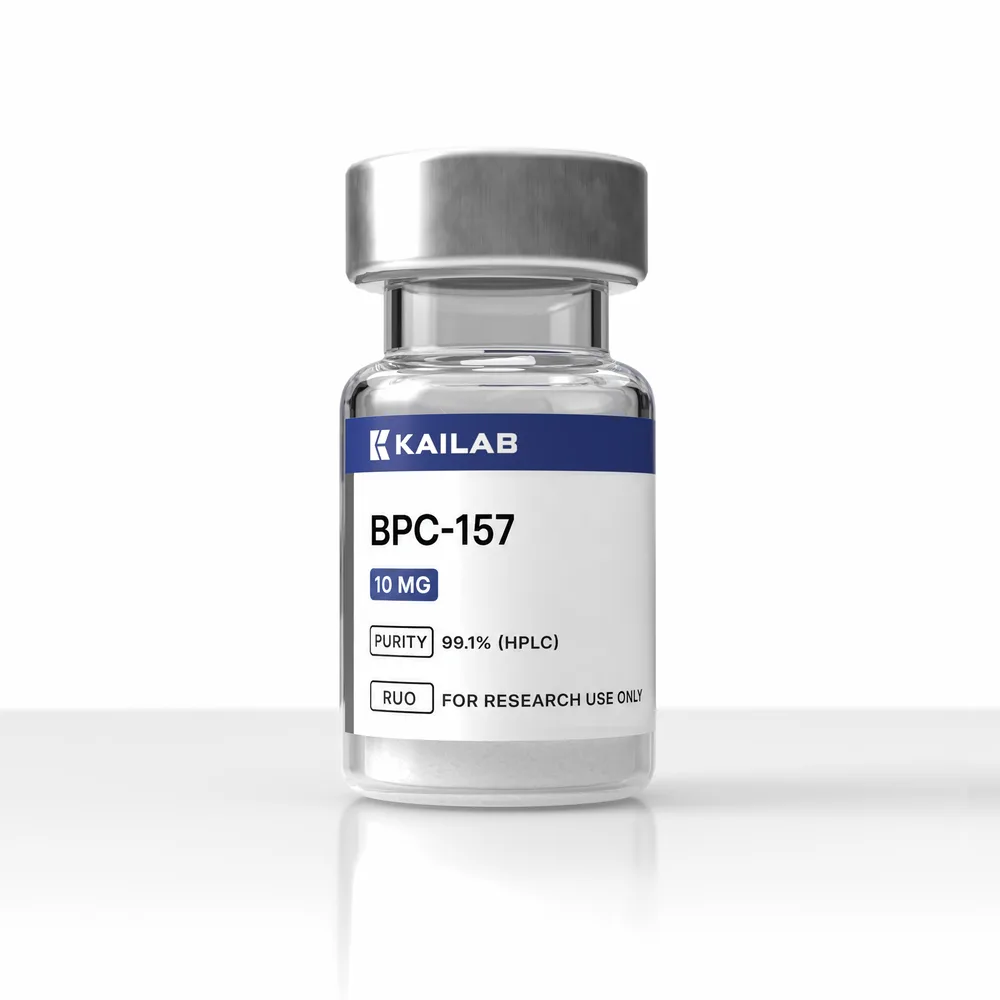
Research peptide popular for recovering from injuries and for gut health.
In stock · ready to ship
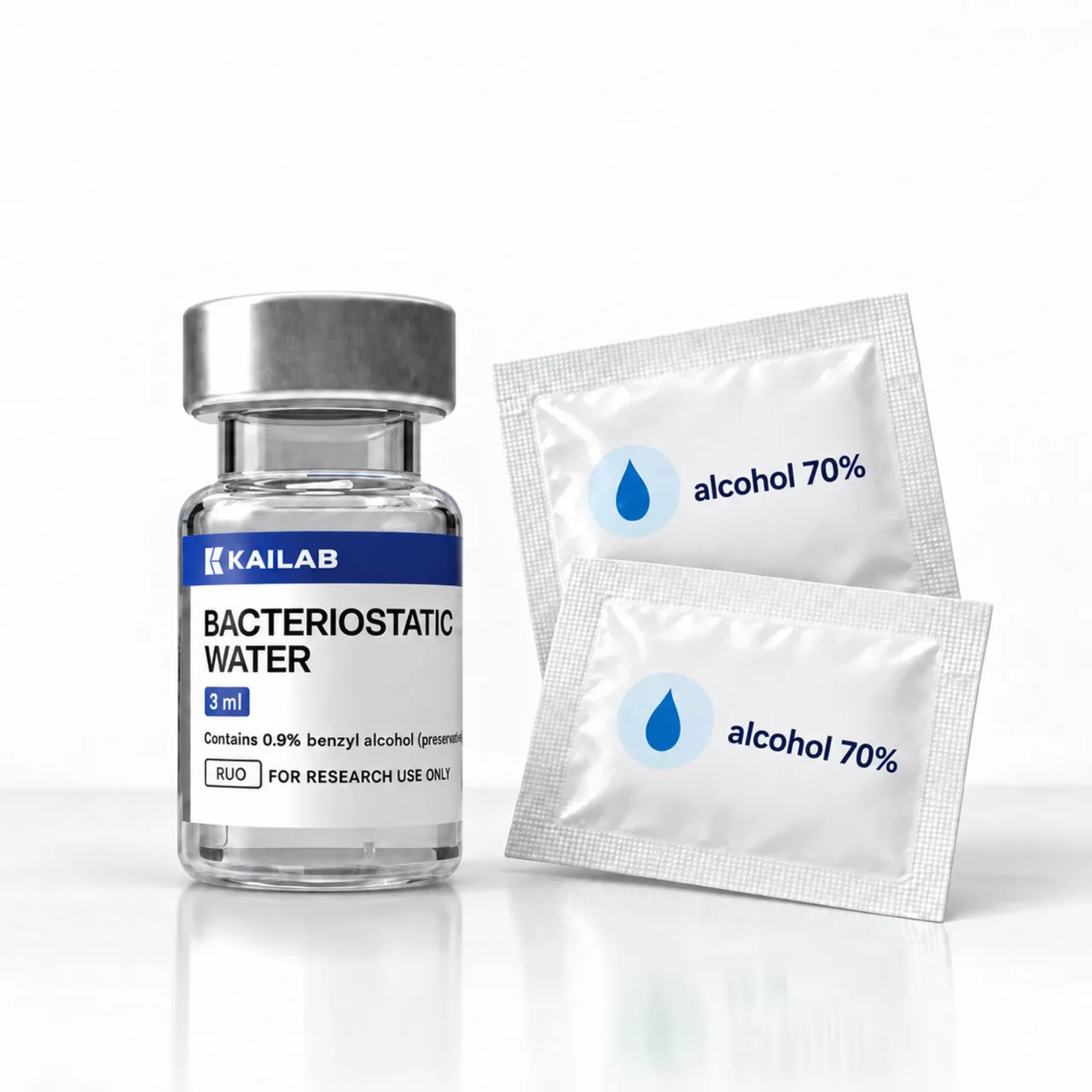 Included free: One 3 mL vial of bacteriostatic water per peptide vial, plus alcohol wipes, in discreet packaging.




 USDT
For research use only. Not for human or veterinary use.
BPC-157 is a synthetic peptide made of 15 amino acids. Its sequence comes from a protective protein in gastric juice, hence its name: Body Protection Compound.
People look for it mainly to recover from tendon, ligament and muscle injuries, and also for stomach and gut discomfort. It's very popular with athletes. These uses come from people's experience; studies in people are still very few.
In the lab it has been seen to help new blood vessels form and to help the cells that repair tissue move in.
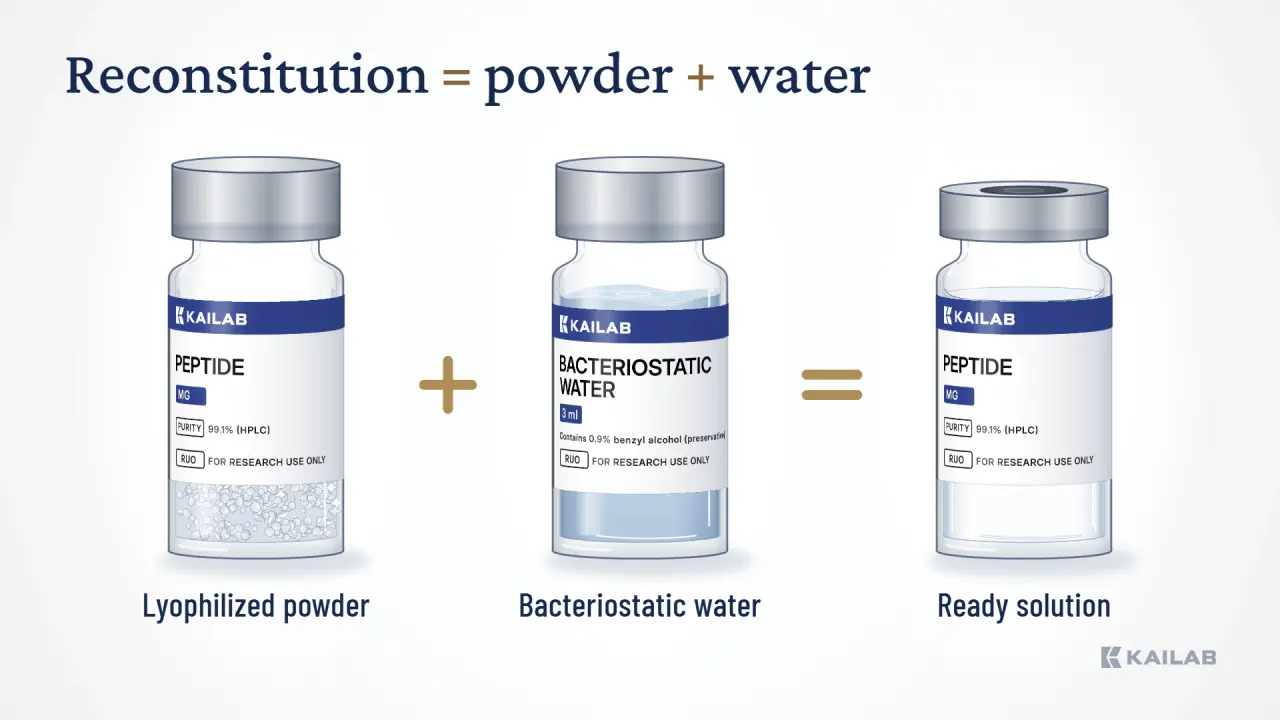
Three steps: mix the powder with 3 mL of water, measure each dose in syringe units and keep it in the fridge.
of bacteriostatic water for the 10 mg vial
Swipe to see all six. Tap an image to see it full size.
Have everything on the “What you need” list at hand.
Wash your hands well and work on a clean surface. Let the vial and the water reach room temperature.
Remove the plastic caps. Wipe the stoppers with alcohol and let them dry.
Draw 3 mL of bacteriostatic water. Read the measurement at the plunger edge closest to the needle.
The vial is vacuum sealed and pulls the water in: hold the plunger right where it enters the syringe. Let the water run down the inside wall of the vial, never straight onto the powder. Dispose of the needle in a rigid container.
Don't shake the vial. Swirl it gently or let it rest; it usually takes 30 seconds to 3 minutes. It's ready when there are no particles and it's completely clear.
Afterward: label the vial with the date you reconstituted it and keep it in the fridge.
For mixing: One 3 mL (3 cc) syringe. If you only have a 1 mL syringe, fill it three times.
To measure each dose: 0.5 mL (50-unit) U-100 insulin syringes. The 1 mL (100-unit) size also works.
Ask for: “One 3 cc syringe and 50-unit insulin syringes.”
This is a suggested progression, not a cycle you have to finish. Starting low and going up every two weeks lets you see how your body responds. It's the reference published by peptidedosages.com; no dose has been established in human studies.
Pick a phase to see it on the syringe
Reconstitute with 3 mL of bacteriostatic water · 3.33 mg/mL (30 units = 1 mg)
Calculate another amount →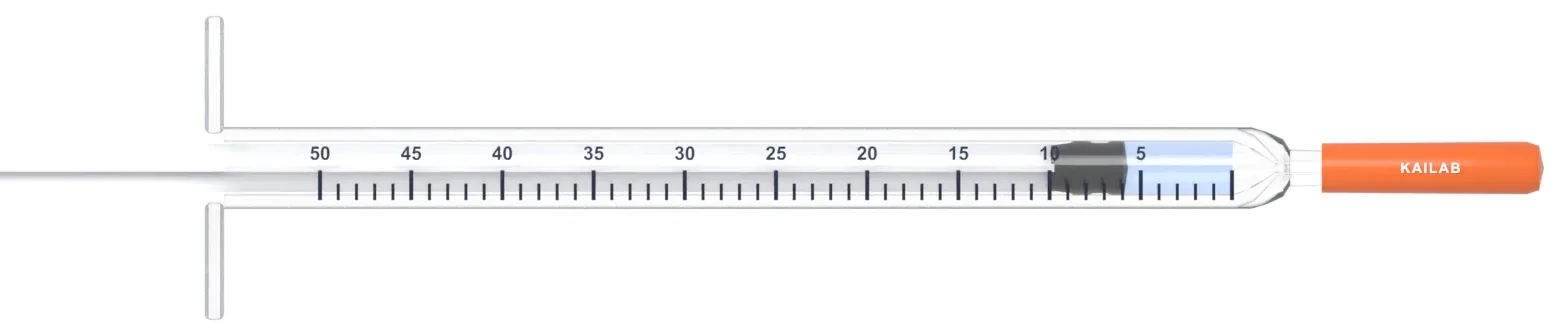
Use it as a guide. You can stay on any week or stop whenever you decide.
Always in the fridge. Take it out only to draw your dose and put it back right away.
Once reconstituted, freezing damages it. Also avoid the fridge door, where the temperature changes the most.
Use it within that time after reconstituting. Protect it from light: keep it in its box or a dark container.
The analysis of the lot we're selling today, done by Janoshik, an independent lab.
Current lotLot BP06261310K · Report 207525
Endotoxin report →Verify endotoxins at Janoshik ↗
There's still very little data in people. These two studies sum up what's known.
The authors reviewed 544 publications on BPC-157 in tendons, ligaments and muscles and included 36. Only one of them was in people.
The authors conclude that controlled clinical trials in people are still missing.
Two adults received 10 mg and then 20 mg intravenously. There were no changes in heart, liver, kidney, thyroid or glucose tests, and no side effects were reported.
With only two people, no conclusions can be drawn about long-term safety.
Last reviewed: Oct 31, 2026 · KAILAB team
People look for it mainly to recover from tendon, ligament, joint and muscle injuries. On forums there are stories of improvement, especially in shoulders, elbows and knees, and also from people who noticed nothing. These are popular uses, not proven effects: there are very few studies in people.
Studies haven't shown that it's necessary. Many people in forums do it, thinking it works better on that area. Subcutaneous injection in the belly or thigh is the most common and simplest way.
No human studies have measured it. Forums talk about one to three weeks, but those are experiences without a comparison group: part of the improvement may be natural recovery.
It's the most popular combination in forums: BPC-157 is associated with the injured area and TB-500 with overall recovery. There are no studies of the two together. If you're interested, see GLOW, which combines them with GHK-Cu in a single vial.
Nobody knows. Oral versions are being studied, but this vial is for reconstituting and injecting, and it hasn't been shown that both routes give the same result.
At KAILAB, the 10 mg vial costs $310,000 COP. It comes with a free 3 mL vial of bacteriostatic water and free shipping to any city in Colombia.
In Quality, on this same page, you can open the report for the strength and lot we sell.
Every peptide vial comes with one 3 mL vial of bacteriostatic water, plus alcohol wipes; the reconstitution guide is on this page. Shipping is free anywhere in Colombia, in discreet packaging.
If your payment is confirmed before 4 p.m. (Monday to Friday) or noon (Saturday), we ship it that same day. After that time, and on Sundays and Colombian holidays, we ship it the next business day. Bogotá time.
Cards, PSE, Nequi, Daviplata and Bancolombia through Wompi, or USDT on the TRC-20 network. You'll see every option at checkout.
Can't find your answer? Visit Help.